
Why unconstrained thinking becomes harder as you age
and how to not let it define who you are

Over a peaceful weekend, a college mate texted, recommending that I read the book “The Little Prince”. A bunch of us college friends, who have spent memorable, wacky and adventurous (no adjective is enough to describe this) times together, often interact on WhatsApp. We get to meet up maybe once a year, so WhatsApp is the medium for us to re-live the memories, or whatever version of the memories we remember now, together. On very active days of these chats, there is mostly banter, one-upping each other, calling each other weird names, and other unmentionable things. Over time, I have come to expect this consistency and rules of engagement from our group chats. The fact that someone recommended a book caught me off guard.
I don’t expect much depth or seriousness from my friends, especially when they are sober. I am sure this feeling is mutual. I had barely heard of this book before, so my initial response to the text was to question my friend’s ability to recommend books (sounds like a children’s book, right?), to get some cheap laughter, and to ignore the message altogether. After all, that is how we boys roll.
A week passed, and curiosity took over. I started and finished the book in just over an hour, and during that time, chapter after chapter, I was fascinated (and somewhat saddened) by how accurately the narrative reflected the nature of growing up as a human and its similarity to what was happening to me and many others in mid-life.
We are all growing up, and instead of expanding, we are restricting our ability to experience what life offers, clouded by superficial, constrained, and utilitarian views. And that if we break through all the artificial rules that force us to see the world in binary, we can truly experience perspectives that are otherwise invisible to us.
The Hat that was a scary Boa Constrictor
In the book, the narrator, a child, draws a sketch (pictured below), inspired by a picture book he read that depicted boa constrictors swallowing wild animals. He then shows the sketch to a group of adults and asks whether they find it scary. The adults mistake it for a hat and laugh it off. He then redraws it (second picture), adding details of the insides of a boa constrictor, but the adults ask him to “forget drawing and focus instead on geography, history, arithmetic, and grammar.”
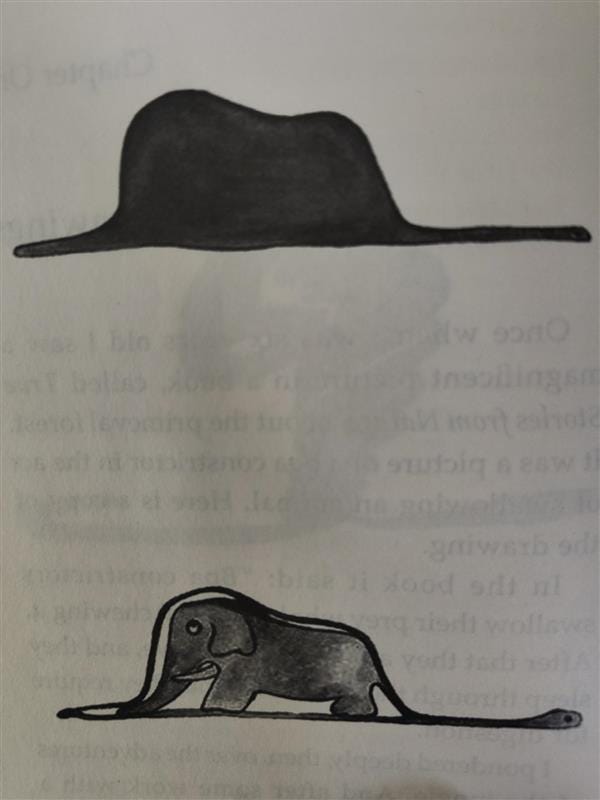
Disheartened by this and by the ineptitude and ignorance of the adults, the child, at the age of six, decides to give up on drawing, exclaiming -
“Grown-ups never understand anything on their own, and it’s a nuisance for children to have to keep explaining things over and over again”
The child grows up to be a pilot and meets a mysterious “Little Prince” from a different planet when his plane crashes in a desert. Throughout the rest of the book, the prince shares stories of his journey through different worlds, inhabited by grown-ups—kings, businessmen, drunks, geographers, and more—who are stuck in their narrow roles and views of the world they inhabit. Each meeting is a reflection of the absurdities of grown-up life and a stark reminder that what is essential in life is missing to the eye, but visible to the heart.
The book is a sharp critique of adulthood and how it forces people to surrender wonder and imagination, for predictability and control.
“When you tell grown-ups that you saw a beautiful house made of rosy brick, with geraniums at the windows and doves on the roof, they can’t imagine such a house. You have to say: ‘I saw a house worth a hundred thousand francs.’ Then they exclaim: ‘Oh, what a pretty house!’”
If this makes you reflect on your own growth, you might want to understand (or acknowledge, if you already do) the patterns that lead us to this stage of adulthood. But first, a bit of interesting history that epitomises this subject.
The “not so” Kodak Moment
Let’s rewind back to the 1970s. Kodak is the leading name across the globe in photography, films, and camera equipment. They are truly the giant across the globe. The Kodak moment campaign, which began in the 1970s, had become synonymous with photography by this time. Camera equipment and film sales for Kodak were rising every year.
Enter Steven Sasson, a graduate engineer from the Rensselaer Polytechnic Institute in New York, with big dreams and aspirations to make his mark in the world of photography technology. Sasson joined Kodak’s R&D lab in Rochester, New York, and was assigned the task of exploring practical use of the new CCD (Charge-Coupled Device) sensor technology - a mechanism that captures light and transfers it into usable data. Although not a secret, hardly anyone knew that Sasson was involved in this project; it was not exactly an area of focus for Kodak.
Sasson gathered a group of tinkerers and technicians like him, and over the next year, they built a prototype of the world’s first digital camera using spare equipment from the lab. The toaster-sized result had a lens from a Super 8 movie camera, a digital converter, and a magnetic-type cassette to store the image. The device took 23 seconds to capture the image, and the cassette would then be removed and played back on a television screen to view it.
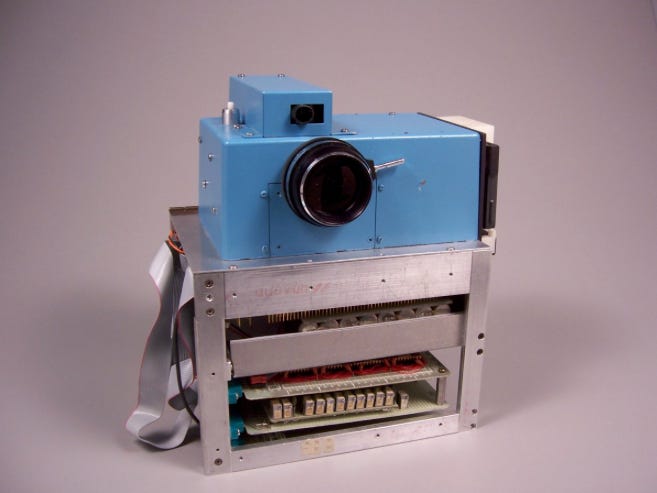
Having accomplished this feat, Sasson and his team presented this idea to Kodak’s executives, explaining how this early prototype could be the future of digital photography. The reactions were, as one would expect from a bunch of people deeply entrenched in an inward worldview of their customers and business. Polite smiles, nods, and murmurs were seen everywhere.
Sasson, in his own words, summed up the mood of the meetings:
“That’s cute, but don’t tell anyone about it”
Kodak’s executives were more focused on the clunky design, weight, slow processing time and low resolution than on the potential for digital photography in the future. They wanted to protect their existing business, which was totally dependent on films, and not divert attention to something less obvious.
To their credit, Kodak did file a patent for this technology, but their obsession with the existing business and reluctance to adopt and scale a new innovation eventually contributed to their downfall as rivals who had less to lose captured the digital market in the next 2 decades. In 2012, Kodak, the company that was synonymous with photography, filed for bankruptcy.
Why is it easier to see the “Hat” than the “Boa” as you mature
John Cleese, a legend of British comedy, redefined satire when he cofounded the Monty Python group. The absurdity of humour in Monty Python sketches went beyond just comedy - the satire was funny because it was relatable, it came from how the real world operates - driven by rules, processes and people who fail to recognise inefficiencies.
In one classic sketch, “Ministry of Silly Walks”, Cleese plays a typical grumpy civil servant whose job is to fund research into developing new and absurd ways of walking. The entire episode is about Cleese and a bunch of applicants moving with utterly outrageous, exaggerated and funny strides, jerky knees, failing legs and trying to prove whose walk is the silliest.
Mr. Putey (Michael Palin): “Well, sir, I have a silly walk and I’d like to obtain a government grant to help me develop it.”
Mr. Teabag (John Cleese): “I see. May I see your silly walk?”
(Putey demonstrates a small, awkward step.)
Mr. Teabag: “That’s not particularly silly. My walk is much sillier.”
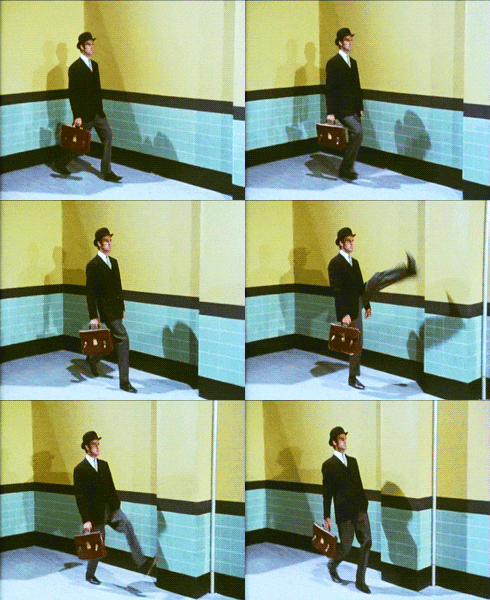
There is physicality in the humour of this sketch, but it goes beyond that. Not only is this a satirical representation of how civil servants and government organisations bind themselves with unnecessarily complicated rules and policies, but it also touches upon the nature of adults - stiff, serious, and constrained - even on childish topics like “A Silly Walk”.
Cleese, in his own book “Creativity: A Short and Cheerful Guide”, talks about how adults, especially professionals, get stuck in what he calls the “Closed Mode” as they gather more and more experience-focused, urgent, practical and execution oriented - even when this is not required. In contrast, children, who are relatively unburdened, are usually in the “Open mode” - playful, daydreaming and full of acceptance of the unknown.
Cleese further argues that adults lose their tolerance for ambiguity, precisely because they are rewarded for being busy, chasing deadlines, outcomes and solving problems quickly. Speed and efficiency rule the majority of an adult's life, and unconstrained thinking takes a backseat.
“We don’t know where we get our ideas from. What we do know is that we do not get them from our laptops. The greatest killer of creativity is rushing to decisions, because the closed mode of thinking is where adults spend most of their time.” - John Cleese
As grown-ups, we are so serious about protecting what exists, and collecting that seriousness as a badge of honour that we leave no room for experimentation, playfulness, and odd, risky ideas - things that come naturally to kids and are important for unlocking creativity. This unnatural state of being is reinforced by years of training through institutions—schools, work, and societal norms—that guide our lives, rewarding accuracy while punishing any trace of ambiguity or deviation from the norms.
The Oasis of Time
Cleese, in his book, dives deeper into balancing the Open and Closed modes from his own experience as a writer and performer. He recognises the importance of both modes as they play specific roles in our evolution and acknowledges that one cannot remain in either mode forever; the magic lies in knowing when to exit one and enter the other.
Cleese recommends that creativity requires that we give our brains permission to “Play” without boundaries and create an “Oasis of Time” where we can do this. This Oasis is a sacred, safe, and preferably predictable combination of space and time (the same time of day or week, and the same location, if possible), where one gives themselves permission to disconnect from closed mode and allow their minds to wander freely without restrictions and interruptions.
It is in these safe enclosures that we allow ourselves to think about anything we want, however silly or stupid it may be. We do not hurry to find the first solution that sounds “practical” or “sensible”; rather, we allow ourselves to explore as much as the Oasis of Time allows us to.
“In order to create boundaries of space and time, we have to be intentional. … You have to create a kind of oasis in your life. … You must make a quiet space for yourself where you will be undisturbed.” - John Cleese
We allow half-baked ideas, thoughts to come to the surface and let them enter our subconscious. We don’t bother about whether they can be achieved or not, but embrace the flow of the mind. Cleese argues that the magic happens when you let incomplete ideas enter the subconscious and let them linger; the mind then does the hard work and delivers clearer insights and ideas out of those incomplete thoughts.
The hard part is to allow ourselves the opportunity to get into such Oasis conditions consistently, especially in our result-oriented lifestyles.
From personal experience, every time I have worried endlessly about solving a topic, and there are many - Can I play that chord progression on guitar? What if I miss a few days of the gym? Will my kid get the best education in the school? What if I get fired from my work? Do I know anything else? - All it has brought is stress and anxiety. Solutions come at their own pace, and for me, letting some of them simmer in the mind for some time helps get better outcomes. For e.g., I try to listen to the song I want to play many, many times before attempting it on the guitar. It works better for me than starting off with a prescribed lesson.
A concise and engaging summary of this book is available below for easy consumption.
Draw and re-draw the Ensō of your life
In Zen Buddhism, an Ensō is a circle drawn with a single, fluid brushstroke, usually in black on white paper. Buddhist monks draw these pictures regularly as a representation of “suchness” or “tathatā”-the reality of things as they are.
The Ensō is intentionally not a perfect circle, as it is created with a single unbroken stroke. Each time it is drawn, the result may differ, reflecting the imperfection and uniqueness of the present moment. The drawing is seen as an expression of the mind's current state: hesitation can make the circle stiff, ego might render it overly perfect, and anxiety can distort its shape.
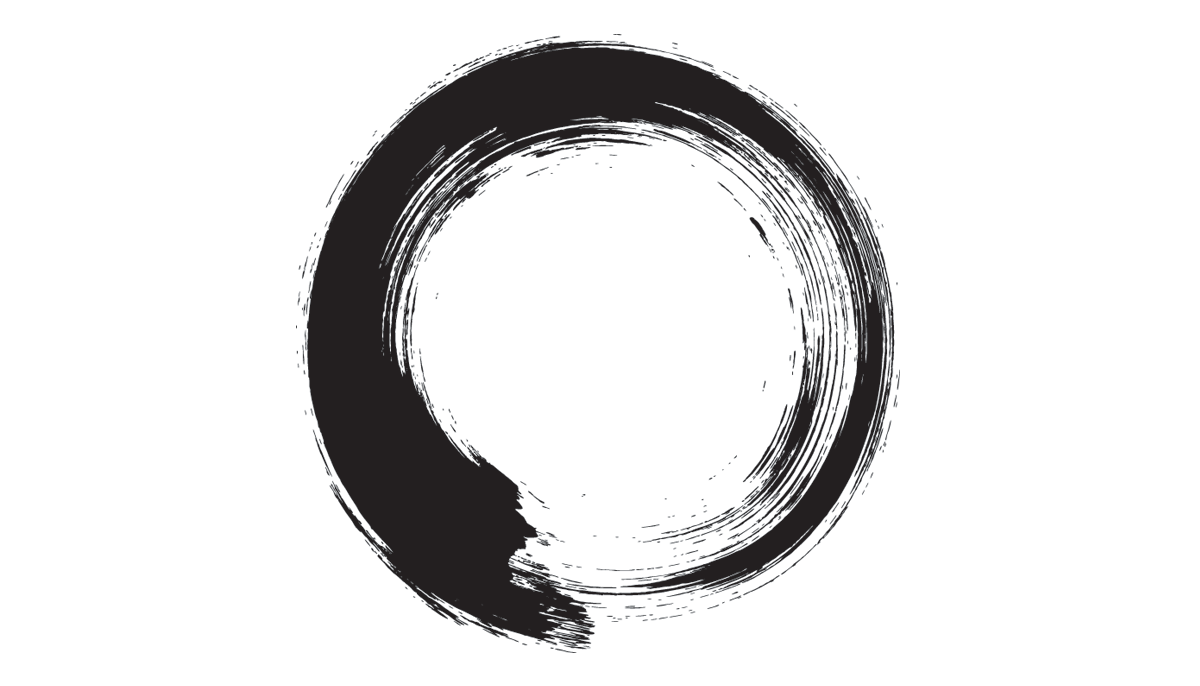
The imperfection in the Ensō is considered to be the same as the imperfections in our minds and decisions that we make.
“When you draw a circle, you begin, you follow, you complete. But it is never the same circle. Each one shows you who you are, right now.”- Kazuaki Tanahashi
Just like Cleese’s view on the beauty and value of freely arriving at imperfect and incomplete ideas, the Ensō visually represents a similar state of mind. Monks draw these pictures over and over again as a practice to return to the openness and childlike excitement of what possibilities the next one might open.
Similarly, the absence of rules or regulations on drawing a perfect circle allow them to explore many possibilities simultaneously, opening the door to creative freedom and expression.
Stay Undecided, Stay Unconstrained
However clichéd this may sound, our lives are complicated. We tend to look at everything in binaries - right versus wrong, with me or against me, right path versus wrong path - but it isn’t that obvious. There is beauty in this Undecidability which mathematically means - A decision problem that admits no algorithmic solution i.e. no computer or logical machine can solve this problem.
A decision problem is undecidable if it is impossible to construct any algorithm (or Turing machine) that can always provide a definitive "yes" or "no" answer for every possible input; such problems fundamentally lack a general systematic solution.
Unconstrained thinking and creativity lie in staying undecided for as long as possible, because if we don’t, our brains will default back to optimising for the easiest solution possible based on our experiences of having handled a similar situation before.
And that alone must not define how we grow up as adults.
This was a great read! Really insightful and great ✨✨